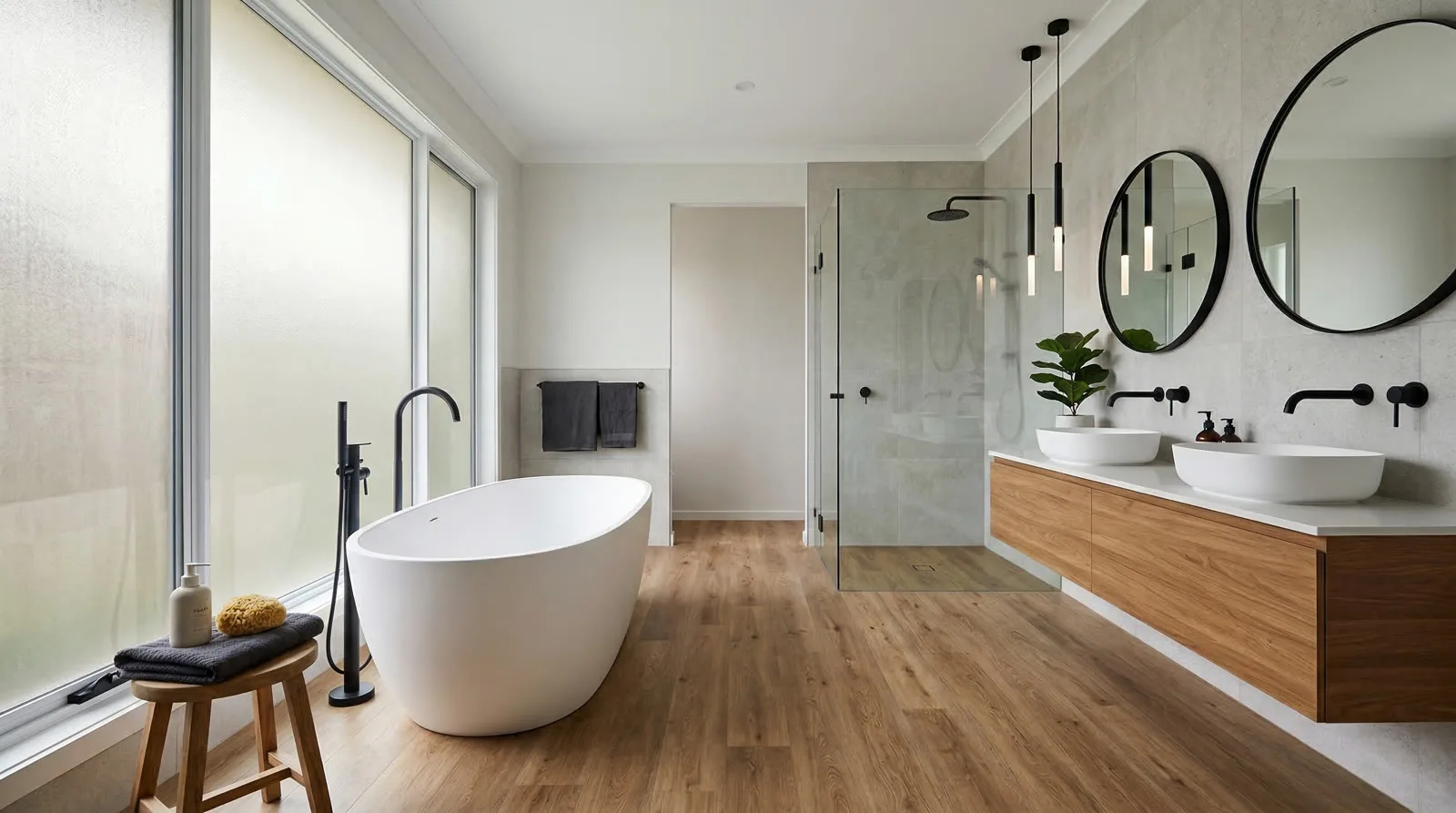
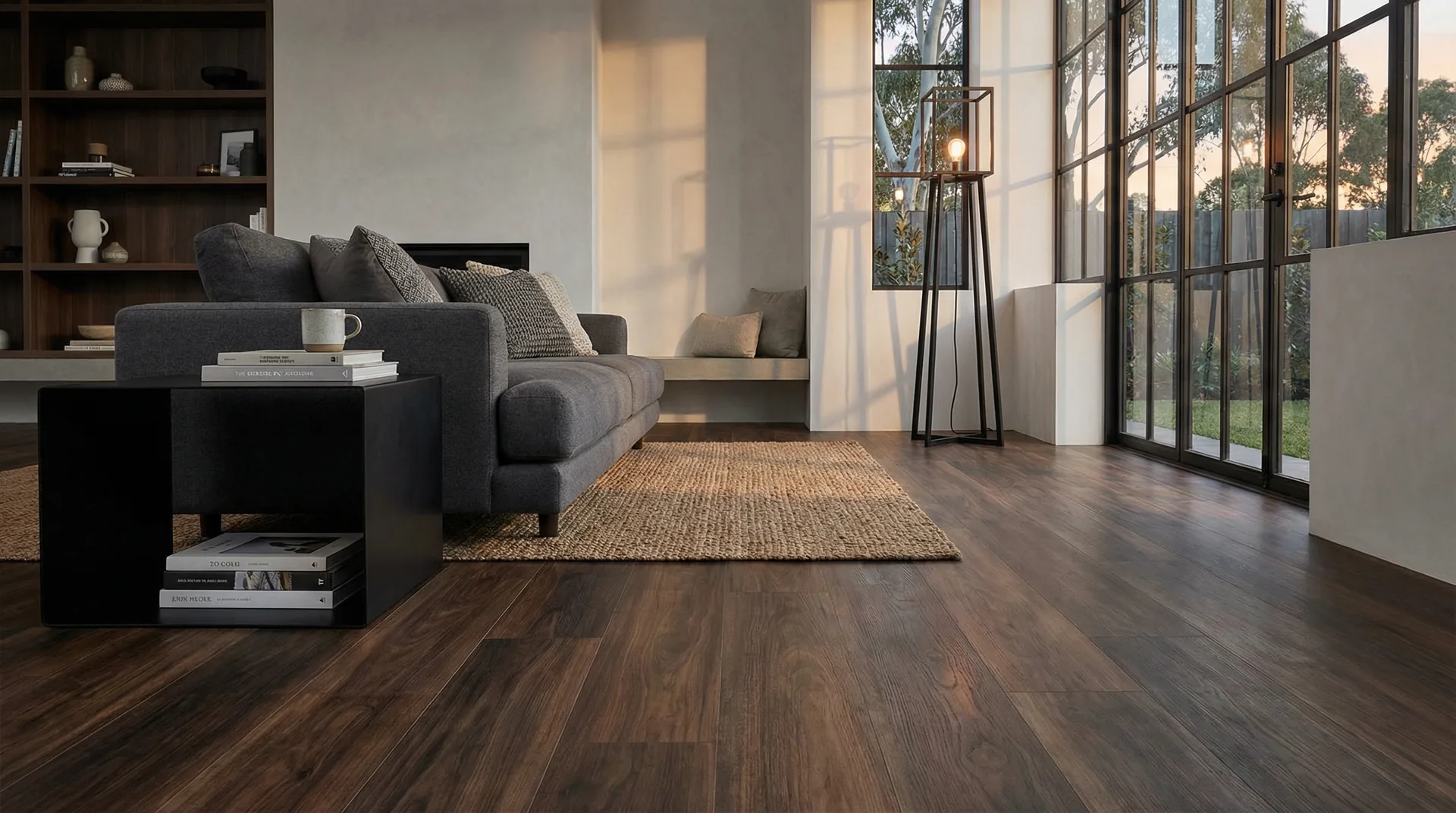
The hybrid vinyl versus laminate debate is one of the most common conversations we have on the showroom floor — and for good reason. Both products look convincingly like timber. Both click together without nails or glue. Both are marketed as durable, easy-care alternatives to solid hardwood. Yet beneath the surface, they are fundamentally different products engineered for different circumstances, with meaningfully different performance characteristics that will affect how your floor looks and functions for the next decade or more.
Getting this decision right requires understanding what each product actually is — not just the marketing language around it.
By The Flooring Centre Technical Team
What Hybrid Actually Is
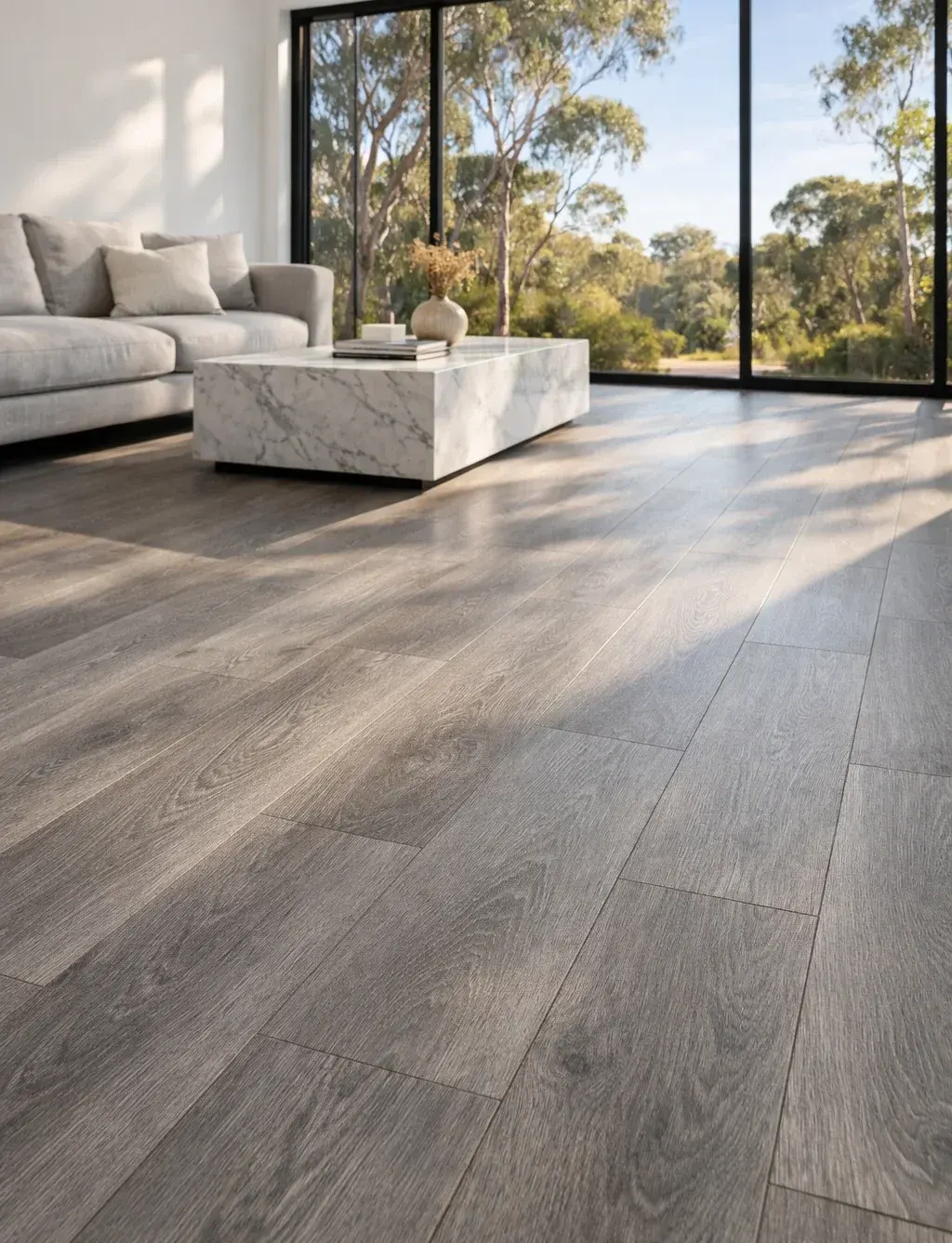
The term "hybrid" is used loosely in the flooring industry, but it refers to a category of flooring that combines a few features from other categories, hence the name hybrid. Originally, the name arrived from the fact that Hybrid performed like a vinyl, installed like a laminate, and looked like a timber.
There are two dominant core types:
SPC (Solid Polymer Core): A blend of limestone powder, polyvinyl chloride, and stabilisers that produces an extremely dense, rigid core. SPC boards are typically 6–9mm thick, heavier than EPC, at around twice the weight per m³ and resistant to denting.
EPC (Expanded Polymer Core): An extruded core combining foaming agents with the limestone powder, polyvinyl chloride, and stabilisers. The foamed structure creates a board that is slightly softer underfoot than SPC, with marginally better acoustic performance at the core level, and is typically 7–12mm thick.
Both core types are topped with the same essential layer stack: a decorative print film — a photographic image or design layer — bonded beneath a clear wear layer of PVC. That wear layer, measured in millimetres, is what determines the floor's durability.
Wear Layer Thickness: The Number That Matters Most
0.3mm Entry-level residential. Suitable for low-traffic bedrooms and studies.
0.5mm Mid-to-heavy residential and light commercial. The most common specification for domestic installations.
0.7mm Commercial-grade, specified for some retail and hospitality.
With Hybrid flooring, generally the thicker the core the stronger the locking mechanism will be and the more stable the product will be.
What Water Resistant Laminate Actually Is
Laminate flooring is an entirely different product. At its core is WR HDF — a water resistant high-density fibreboard — a compressed wood fibre product that is exceptionally rigid and stable. Onto that WR HDF core is bonded a photographic décor paper layer (the printed timber image) and over that, a protective melamine resin overlay that is thermally fused under heat and pressure.
The result is a product with outstanding abrasion resistance on the surface. Laminate is rated by AC class — Abrasion Class — under European Standard EN 13329, which governs laminate flooring characteristics including surface resistance, swelling, and impact resistance:
AC3: General residential use
AC4: Commercial light use / heavy residential
AC5: Commercial general use
Premium laminate boards in the AC4–AC5 range offer surface hardness that is in a league of its own compared to PVC-topped hybrid products for scratch resistance. The aluminium oxide surface is particularly resistant to furniture scuffs and pet claws.
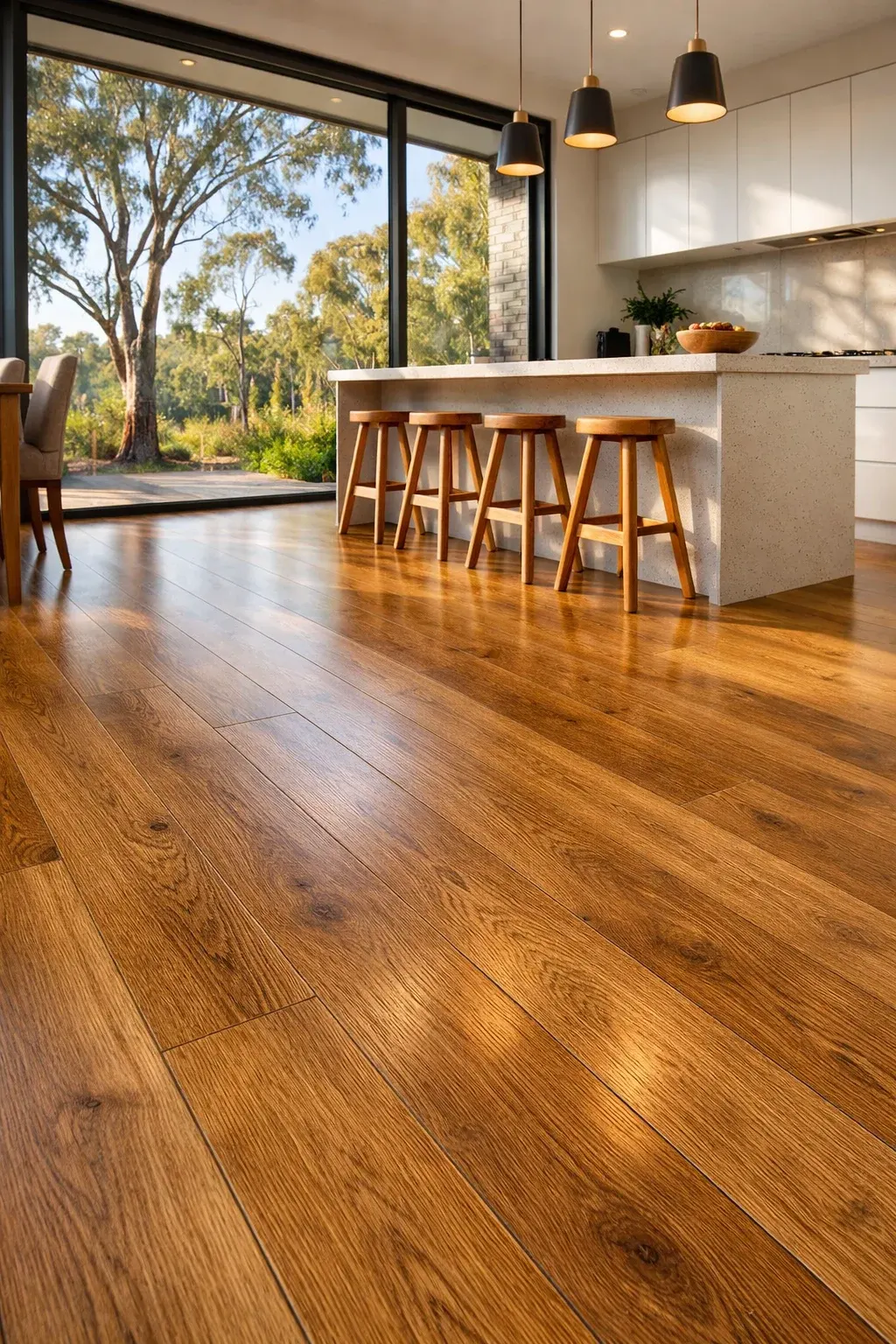
The Water Question: Clearing Up the Most Common Misconception
This is where the conversation matters most — and where marketing language creates the most confusion.
Hybrid is water-resistant. It is not waterproof.
The vinyl layers themselves are impermeable to water. A spill on a hybrid floor can sit for hours, even days, without penetrating the face of the board. However, sustained moisture — through subfloor vapour, persistently wet joint lines, or standing water that infiltrates the click-lock joints — can, over time, affect the adhesive bonds between layers and in the case of rising moisture vapour, ultimately the stability of the floor. Hybrid is correctly described as highly water-resistant, and suitable for wet-adjacent areas including kitchens, laundries, and bathrooms. It is not specified for submersion, wet room showers, or areas with active water ingress at the subfloor level.
Water Resistant Laminate's relationship with water is in some ways easier to understand. That's because instead of general claims on Hybrid flooring like "Waterproof" which then became "Water Resistant", but still no actual definition of what that means or clarity around how long protection lasts, WR HDF is measured in exposure time so you can choose the level of water resistance that suits your needs.
At the heart of water-resistant laminate is its WR HDF core which is a compressed wood fibre product. Manufacturers have spent great time and effort to increase the water resistance of their products in this category and done that by increasing the density and quality of the WR HDF core, by making the locking systems tighter and in some cases by applying moisture resistance qualities to the edges and the core itself.
Water resistance on a laminate floor can be measured in a universal structure of hours of exposure. Generally these currently range from 48 hours, right up to as high as 240 hours. This is the degree of time it takes for the board to experience irreversible damage from standing water.
Dimensional Stability and Australian Climate Conditions
Australia's climate creates specific challenges that European flooring standards do not always anticipate. The combination of hot summers, dry winters with central heating, and the prevalence of concrete slab construction in Victorian and Queensland homes creates conditions where dimensional stability is critical.
Hybrid flooring expands and contracts from changes in temperature. Because it is made with plastic, when it gets hot, it will expand. When it gets cold, it will contract. This should always be considered when considering which floor is right for your home. If you have plenty of westerly or northerly aspects, those areas may become very hot during summer and the likelihood of experiencing an issue with a thermally reactive floor is higher. Hybrid flooring does not dimensionally alter too much from humidity changes though, which is one of its strengths in tropical and high humidity environments.
Water Resistant Laminate expands and contracts from changes in humidity, not temperature. Because it is made with wood, when it gets humid, it will expand as the wood absorbs the moisture in the air. When it gets dry, the timber components will release moisture and contract. This should always be considered when considering which floor is right for your home. Water Resistant Laminate flooring does not dimensionally alter too much from temperature changes, which is one of its strengths in hot and cold, yet relatively stable humidity environments.
Floating Floor Installation Standards
Both products are installed as floating floors, governed by EN 16511:2014 — Semi-rigid (resilient) modular flooring elements (tiles and planks) for hybrid, and EN 13329 for laminate. We recommend;
- Maximum acceptable subfloor deviation: ±3mm over a 3-metre span
- Required expansion gap provisions at all fixed vertical elements
Hybrid flooring now requires a moisture barrier to be installed under all installations prior to installing the actual hybrid floor to protect against rising moisture vapour and in some cases on chipboard subfloors, the black plastic also prevents the IXPE or EVA underlay from semi-bonding to the chipboard during high heat events.
Click-Lock Systems and Installation Practicalities
Both product categories have adopted the generation of click-lock installation systems pioneered by Välinge Innovation, whose licensed 5G technology is now widely used across both hybrid and laminate ranges. The tongue engages with the locking groove at an angle-then-press motion, creating a mechanically interlocked joint that requires no adhesive and no fasteners.
The practical difference in installation lies in board rigidity.
Hybrid boards are less forgiving of subfloor imperfections at the joint — a slight hollow beneath the joint can cause the locking mechanism to stress and eventually fracture. Water Resistant Laminate boards, being wood-based, have some natural flex that can accommodate minor subfloor variation better than hybrid, however it is always best to treat both the same when it comes to installations and subfloor tolerances. The flatter the better – every time.
Pre-attached underlay is common across Hybrid products. Where boards include a pre-attached foam underlay, additional separate underlay should not be used, as the combined thickness and softness will compromise the click-lock joint integrity.
Acoustic Performance
For multi-storey installations — an increasingly common scenario in Melbourne's apartment market — acoustic performance is a genuine engineering requirement, not a comfort consideration alone.
The National Construction Code (NCC) specifies minimum acoustic performance for Class 2 buildings (apartments) of an LnTW of less than 62. The lower the number the better the result.
Do not make your underlay selection an afterthought.
Always speak to your Owners Corporation and obtain your specific regulations regarding the LnTW rating your apartment complex requires. These requirements often are more stringent than the NCC code.
In most cases, various acoustic underlays can be teamed with different products to achieve compliance.
Making the Right Decision
Both hybrid and laminate are solid flooring products when correctly specified and properly installed. The decision is not about which is categorically superior — it is about which is right for your specific conditions: your subfloor type, your climate management, your traffic levels, and your lifestyle.
The conversation starts with an honest assessment of your space. At The Flooring Centre, we walk every client through a site evaluation before making a product recommendation. The floor that looks beautiful in the showroom needs to perform beautifully in your home for fifteen years or more — and that outcome begins with the right product for the right application.
Published by The Flooring Centre — Melbourne's premium carpet and flooring superstores. Visit our Nunawading and Hawthorn showrooms.